latest News

Orthotics vs. Barefoot Running
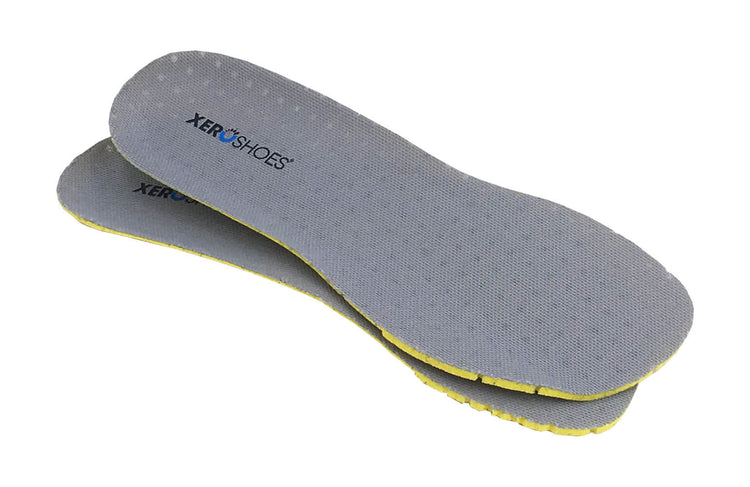
The only time I've worn anything other than my huaraches or my sprinting spikes in the last 16 months has been the 3 times I put on my old running shoes... so I could shovel snow. Those shoes have my $200 orthotics in them. And each time I've put them on, I have the same thought, "Geez, my foot can't even move. How did I wear these?" Often, when I'm out and about, someone will see my Xero Shoes and say, "Those look great, but I can't wear them. I need orthotics." "I used to think the same thing," I reply. "But let me ask you something. When has putting a cast on a limb and immobilizing it made it stronger?" "Well... never," they say, not wanting to admit the obvious fatal flaw in their reasoning. "Right. So you put a cast on your foot, called an orthotic, it gets weaker. Then you need a new cast to handle how much weaker you've gotten, and then... Oh, by the way," I mention, "you had your orthotic made while you were standing on a flat surface, didn't you?" "Yes." "Look at the shape of your shoe. Is it flat?" "Uh... no." "Because of how the shape of the shoe influences the way you move, you really need a different orthotic for each shoe. And it needs to be fitted based on how you move in that shoe, not how you stand, motionless, on the ground." "Hmmm..." I can see the glimmer of realization in their eyes. Well, now I have new ammunition in my anti-orthotic holster, an article in the New York Times by one of my favorite science writers, Gina Kolata: Close Look at Orthotics Raises a Welter of Doubts Let me give you a few highlights: Shoe inserts or orthotics may be helpful as a short-term solution, preventing injuries in some athletes. But it is not clear how to make inserts that work. The idea that they are supposed to correct mechanical-alignment problems does not hold up. Kinda sums it up, yes? Just wait, there's more. Gina interviews the top orthotics researcher, Benno M. Nigg, who says this about a man named Jason's flat feet: There is no need to “correct” a flat foot. All Jason needs to do is strengthen his foot and ankle muscles and then try running. without orthotics. Who knew? ;-) Well, *I* did... I've had really flat feet my whole life... until I started running and walking barefoot. Now I have some arch in my foot. BTW, I'm legally required to say that barefoot running shoes and sandals are not a medical treatment, I'm not a doctor, nor am I able to promise that by going without shoes you will develop arches in your feet. That said, do some Googling and you'll hear a lot of similar stories. Do with that what you will. Sometimes people with high arches give me the same story. "I need support because my arches are so high." Just because they're high, doesn't mean they're strong, especially if you've been supporting them all your life... remember the cast analogy. Now I'm not going to say that orthotics don't do something. But the question is: What do they do? How do they do it? And are they really helping? Dr. Joseph Hamill responds, in Gina's article: I guess the main thing to note is that, as biomechanists, we really do not know how orthotics work. Results from his studies cause Dr. Nigg to add: There was no way to predict the effect of a given orthotic. Hey, I'm not here to make anyone throw away their high-priced foot supports even though I haven't worn mine since 2009. But I am here to inspire a bit of wondering, a bit of curiosity, a bit of common sense, and a bit of critical thinking. Man lived without orthotics for a LOOOONG time. That doesn't mean they couldn't have benefited from them. But it means they got along without them. Maybe you can too. It doesn't cost much -- in time or dollars -- to set up an experiment for one. The content of this post does not constitute and is not intended to be a substitute for professional medical advice, diagnosis or treatment. Always seek the advice of a physician or other qualified health provider with any questions or concerns you may have about your health or a medical condition.

Running Sandals for Health!
Yet another study showing how running sandals and barefoot running could be better for your body! Flip-flops and sneakers with flexible soles are easier on the knees than clogs or even special walking shoes, a study by Rush University Medical Center has found. And that's important, because loading on the knee joints is a key factor in the development of osteoarthritis. The study has been published online in the journal Arthritis Care & Research. "Traditionally, footwear has been engineered to provide maximum support and comfort for the foot, with little attention paid to the biomechanical effects on the rest of the leg," said Dr. Najia Shakoor, a rheumatologist at Rush and the primary author of the study. "But the shoes we wear have a substantial impact on the load on the knee joints, particularly when we walk." "Our study demonstrated that flat, flexible footwear significantly reduces the load on the knee joints compared with supportive, stable shoes with less flexible soles." Osteoarthritis is the most common form of arthritis and a significant source of disability and impaired quality of life. A higher-than-normal load on the knees during walking is a hallmark of the disease, associated with both the severity of osteoarthritis and its progression. Shakoor and her colleagues analyzed the gait of 31 patients with symptoms of osteoarthritis in the Rush Motion Analysis Lab while they walked barefoot and with four popular shoe types: Dansko clogs, which are often worn by healthcare professionals who have to be on their feet much of the day; Brooks Addiction stability shoes, which are prescribed for foot comfort and stability; Puma H-Street shoes, a flat athletic shoe with flexible soles; and flip-flops. The loads on the knee joints differed significantly depending on the footwear. For the clogs and stability shoes, the loads on the knee joints were up to 15 percent greater than with the flat walking shoes, flip-flops or barefoot walking. Knee loading was roughly the same whether the subject wore flips-flops or walked barefoot. "Currently, knee braces and wedged orthotic shoe inserts are used to relieve the load on the knee joints of patients with osteoarthritis, but everyday footwear is also a factor to consider. The results in our study demonstrate that the reduction in load achieved with different footwear, from 11 to 15 percent, is certainly comparable to reduction in load with braces and shoe inserts ," Shakoor said. According to Shakoor, several aspects of footwear affect the joint loading. "Heel height is one factor, and may explain why the stability shoes and clogs in our study, both of which had higher heels, produced greater knee loads," Shakoor said. "Stiffness is also a factor. We've shown in earlier studies that barefoot walking is associated with lower knee loads than walking with conventional footwear. It may be that the flexible movement of the bare foot is mechanically advantageous. The natural flex of the foot when it contacts the ground probably attenuates the impact on the joint, compared to the artificial 'stomping' movement created by a stiff-soled shoe." In the present study, Shakoor said, flip-flops and the walking shoe were flat, flexible and lightweight and seemed to mimic the mechanics when walking with bare feet. "Clogs and stability shoes, conventionally believed to provide appropriate cushioning and support, actually increased the loading on the knee joints, as opposed to shoes with less 'support,' flatter heels and more flexibility," Shakoor said. Shakoor cautioned, however, that knee loading is not the only consideration in any clinical recommendations based on her study. "For the elderly and infirm individuals, flip-flops could contribute to falls because of their loose-fitting design. Factors like these need to be taken into account," Shakoor said. Other researchers at Rush involved in the study were Dr. Mondira Sengupta, Dr. Kharma Foucher, Markus Wimmer, PhD, Louis Fogg, PhD, and Dr. Joel Block. Funding was provided by a grant from the National Institute of Arthritis and Musculoskeletal and Skin Diseases, part of the National Institutes of Health. Source Rush University Medical Center, Chicago, Illinois The content of this post does not constitute and is not intended to be a substitute for professional medical advice, diagnosis or treatment. Always seek the advice of a physician or other qualified health provider with any questions or concerns you may have about your health or a medical condition.